“Not smart enough” is no longer the problem.

People don't use AI because the cost of using it is higher than the problem they were trying to solve. That gap is not a model problem. We're fixing it.

The problem

Know what today holds, before it starts.

What it costs to solve it

…and again next week, when the format changes.

It arrived at 6:40, before you asked. No account to make, no key to generate, nothing new to learn — and nothing here that tells you a model was involved.

Using agents today is a hobby. Most people already have a hobby.

01 — The tax

Value costs more than it returns.

Getting real work out of an agent today means curating skills, wiring up APIs, keeping a sandbox alive, and re-reading documentation that changed last week. Each step is reasonable. Together they are a pastime.

People who don't adopt AI aren't unsophisticated — they are busy. They are technically fluent, they understand exactly what the technology could do for them, and they have correctly calculated that it isn't worth the afternoon. The market today isn't “early adopters and everyone else.”

For a consumer experience, a lot of time is more than two clicks and five seconds. Almost nothing in agents is built to that number yet.

02 — Why it's still open

Nobody has solved this yet.

The distance between what the technology can do and what an ordinary person actually gets out of it on a normal day is enormous. None of it is a model problem. It is a product problem, a reliability problem, and a design problem.

Plenty of people can see the gap. Nobody has closed it. Making this smooth isn't glamorous; it's a thousand small paper cuts, none of which is a dealbreaker, all of which prevent someone from trusting you.

The model is not the product; value is moving up to the application layer. That layer is greenfield in every direction.

03 — After chat

Keep what made chat win. Leave what made it a ceiling.

Chat won for one reason: it asked nothing of anyone. You type, it answers. No new vocabulary, no new habit, no new destination.

Everything doesn't have to become words. A stream of text is a poor way to show a week, a route, a receipt, or a choice between three options. The interface has to fit the task, not the other way around.

Keep

Zero adoption. Nothing to install, nothing to configure, nothing to learn.

Leave

Everything as text. One window that every task has to squeeze through.

04 — The bar

Daily, or it doesn't count.

Products that do a rare thing well don't survive, however impressive the thing is. Growth is rarely what kills them. Frequency is.

Nothing here survives without passing the toothbrush test. A product earns the right to do the occasional, impressive thing only after it has become part of an ordinary day. We would rather be indispensable on Tuesday than remarkable once a quarter.

05 — What we're building

Pepper

An assistant for people who don't want a new hobby. It reaches you where you already are — a text, an email, the app you already have open — rather than asking you to come somewhere new. It is trusted with the things that matter and honest about what it touched. It avoids alienating people with unfamiliar vocabulary and concepts. And it is pleasant, because people use what is pleasant to use and abandon what isn't.

It's live, and we're letting people in from a waitlist. Come judge it on an ordinary Tuesday.

Join the waitlist

06 — Team

Two of us, so far.

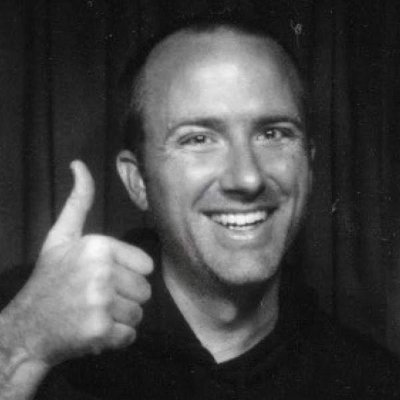
Chris Perry

Chris Perry

Co-founder & CEO

Formerly Director of Product Management, Google · 13 years

Launched Gemini CLI. Grew Google Colab past ten million monthly developers. Founding member of the Google Photos team, where he built intelligent photo search and face grouping — AI that a billion people used without ever being told it was AI.

Allen Hutchison

Allen Hutchison

Co-founder & CTO

Formerly Distinguished Engineer, Google DeepMind · 21 years

Launched Gemini CLI and built the Antigravity SDK. Helped form Google's Core ML organization, leading the XLA compilers, runtimes, and Cloud TPU beneath it. Ran the Maps engineering teams behind Street View, Google Earth, and 3D imagery. Left a decade of running large organizations to go back to building.